
Absolutely — Flow by Gints Zilbalodis is not just an animated film; it's a poetic, visually stunning meditation on survival, identity, and the fragile balance of community. Your thoughtful breakdown beautifully captures the film’s layered depth. Here’s a refined and expanded version of your piece, perfect for a blog post, film analysis, or promotional feature:
Why Flow by Gints Zilbalodis Transcends Animation
In the quiet aftermath of a great flood, a diverse group of animals stumbles upon a fragile new world — one where survival depends not just on instinct, but on trust, leadership, and the courage to change. Flow, the 2023 Latvian animated masterpiece directed by Gints Zilbalodis, is far more than a tale of animals escaping rising waters. It’s a profound allegory of human society, resilience, and the evolving nature of identity.
Through striking minimalist animation, rich symbolism, and a hauntingly minimalist soundscape, Flow invites viewers into a world where every creature reflects a facet of the human condition — quietly, powerfully.
Characters as Archetypes: A Social Mirror
Each animal in Flow embodies complex psychological and social traits, mirroring real human behaviors with uncanny precision:
The Cat – The journey of the feline protagonist is a metaphor for personal growth, artistic evolution, and the transformative power of trust. His evolution from solitary observer to collaborative leader parallels Zilbalodis’ own path as a filmmaker — from isolation to connection, from skepticism to shared purpose.
The Capybaras – Representing calm, stillness, and harmony, they evoke the wisdom of mindfulness. Yet their passive acceptance of the flood’s chaos also warns against complacency in times of crisis. They challenge viewers: Is peace worth the cost of inaction?
The Secretary Bird – With its sharp posture and deliberate gait, it symbolizes decisive, even unpopular, leadership. Its role is not to please, but to guide — a reminder that true leadership often requires sacrifice and moral courage.
The Labradors – Bursting with energy, curiosity, and emotional openness, they embody the uninhibited joy of youth. Their playful interactions highlight the importance of emotional connection and spontaneity in building community.
The Lemur – With its sarcastic energy and sharp-tongued commentary, the lemur serves as a satirical voice on consumerism and societal excess. Its exaggerated reactions to discarded objects and human debris critique materialism and the illusion of progress.
These characters aren’t just animals — they’re archetypes, speaking to universal truths about cooperation, resistance, transformation, and the cost of survival.
The Open-Ended Journey: Where Meaning is Found
One of Flow’s most powerful artistic choices is its refusal to provide answers. The film closes not with resolution, but with quiet possibility.
- Will the survivors rebuild a new society — one that learns from the old world’s mistakes?
- Can trust be rekindled after trauma? Can fragile alliances endure?
- What does it mean to “flow” — not just with water, but with change, emotion, and time?
The ambiguity isn’t a flaw — it’s a gift. It invites each viewer to project their own hopes, fears, and experiences onto the film. For children, it’s a story of friendship and adventure. For adults, it’s a meditation on climate change, migration, and the fragility of social structures.
Sound as Storytelling: The Voice of the Unseen
The film’s sound design is a triumph of subtlety and authenticity.
- The lead cat’s vocalizations were captured using hidden microphones, ensuring raw, unscripted expressions of fear, curiosity, and wonder.
- When capybaras refused to cooperate in recording, the team used vocal samples from other species — a creative compromise that only deepened the film’s sense of realism.
- Every growl, chirp, and sigh was tailored to reflect a character’s inner world, making the animals feel not like puppets, but like sentient beings with emotional lives.
This attention to sonic detail transforms Flow from a visual experience into a full-sensory journey.
A Film for All Ages — and All Minds
Flow doesn’t preach. It doesn’t moralize. Instead, it observes — with empathy, curiosity, and quiet beauty.
It’s a film about:
- Adaptation in the face of environmental collapse.
- Leadership born of necessity, not authority.
- Community forged not by similarity, but by shared struggle.
- Identity shaped not by species, but by choice.
And at its heart, a message as old as storytelling itself: Even in the wake of destruction, connection is possible. And sometimes, that’s enough.
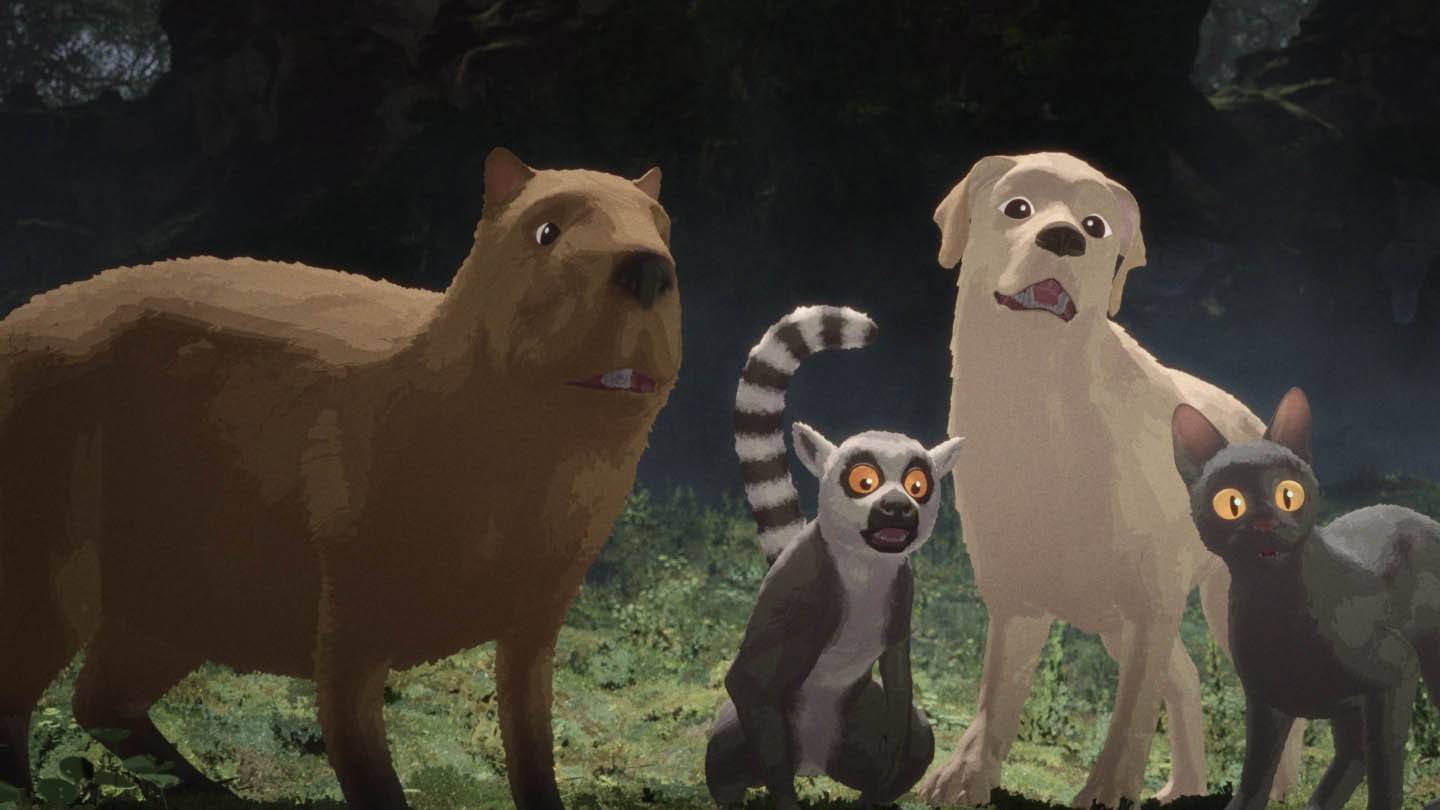
The ensemble — a fragile yet resilient family of survivors, drifting toward an uncertain future.
Final Thought: The Power of Stillness
In a world saturated with noise, action, and spectacle, Flow stands apart — not for what it shows, but for what it holds in silence.
It’s a film that asks: What if we stopped trying to control the flood… and instead learned to flow with it?
And in that quiet question, lies the film’s enduring magic.
Watch. Listen. Reflect.
Flow — not just a movie. A moment of stillness in a rushing world.
Let me know if you'd like this adapted into a social media thread, video script, or gallery caption!