
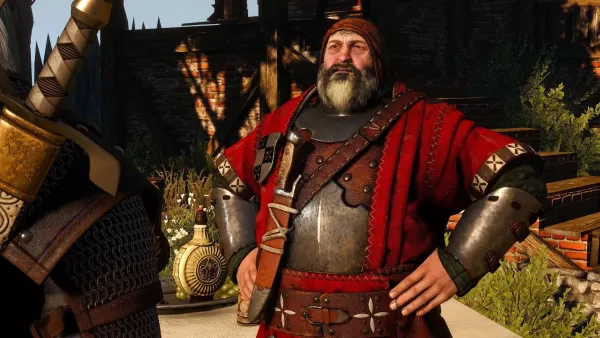

CD Projekt Red consistently delivers exceptional gaming experiences. The Witcher 3, celebrating its 10th anniversary, remains widely regarded among the greatest RPGs ever created. Similarly, Cyberpunk 2077 has transformed through major updates into one of the most immersive open-world RPGs available. These flagship titles, along with other innovative releases, have cemented the studio's reputation for excellence in game development.
What truly distinguishes CDPR's games is how seamlessly their interlocking systems create a cohesive, believable world. The studio's mastery lies in making player choices feel genuinely impactful through dynamic storytelling, world-building, and character development. While many RPG developers pursue this design philosophy, few achieve the level of execution seen in CDPR's works.
"In many AAA RPGs, you can sense the technical constraints limiting designers' ambitions," notes Patrick Mills, CDPR's franchise content strategy lead. "Players often mistake these limitations for poor design, when in reality the development tools simply couldn't support the vision. That's never been our challenge."
The studio's proprietary REDengine, refined through four iterations, has been instrumental in realizing their creative ambitions. This custom toolkit enables the intricate interconnected systems that make choices feel meaningful and world elements responsive to player actions.
As their engine evolved, so too did CDPR's quest design complexity. While The Witcher series focused on exploration, dialogue, and combat systems, Cyberpunk 2077 introduced deep character customization requiring additional gameplay systems like stealth and hacking mechanics. The Phantom Liberty expansion pushed boundaries further with missions spanning diverse genres, including a psychological horror-inspired finale.
"For expansive RPGs, gameplay variety isn't just desirable—it's essential," explains Miles Tost, CDPR's level design lead. "Even with outstanding narratives, players need fresh experiences to maintain engagement across dozens of hours."
Storytelling Through Meaningful Choices
CDPR's narrative approach emphasizes unexpected twists and player agency. Rather than conventional "bandit raid" quests, their scenarios feature layered moral dilemmas. Through rigorous "destruction testing," playtesters explore every conceivable approach, allowing designers to refine quests for maximum player freedom.
While gameplay choices abound, CDPR excels at high-impact story decisions that reshape narratives. These choices resist binary morality systems, instead presenting complex dilemmas where consequences often emerge unexpectedly later in the story. The studio's signature touch is making every outcome—even tragic ones—feel narratively satisfying.
"We ensure players understand each choice's context and implications beforehand," explains Paweł Sasko, associate game director. "When consequences unfold, they should feel earned and thematically coherent."

This philosophy shines in Cyberpunk 2077's Phantom Liberty expansion, where players face a morally ambiguous choice between aiding rogue agent Songbird or turning her over to Reed. Neither option is clearly "right"—each reflects different values and priorities. The expansion improved upon the base game by more clearly telegraphing choices and their consequences.
"With Phantom Liberty, we addressed player feedback about choice visibility," Tost explains. "We implemented more explicit branching paths while maintaining narrative nuance."
Looking Ahead to The Witcher 4
As CDPR transitions to Unreal Engine 5 for their next Witcher title, they aim to push player agency further. "We want to evolve The Witcher by providing more gameplay tools and deeper consequence systems," says Sebastian Kalemba, game director for the upcoming project.
The challenge lies in maintaining their signature depth while adapting to new technical foundations. "Expansion development always feels more creatively fulfilling because core systems are established," Tost notes. "Now we're focused on achieving that clarity earlier in development."

CDPR's signature approach to choice remains player-centered. "We don't foreshadow every consequence," Kalemba explains. "Just like real life, you make choices based on your understanding at the time—the outcomes unfold naturally." This philosophy will guide The Witcher 4's development as the studio seeks to advance beyond previous achievements while maintaining the depth that defines their work.