Deadlock, Valve's intriguing MOBA-shooter hybrid, has recently seen its player base shrink dramatically. Where once the game boasted a peak online count of over 170,000 players, by the start of 2025, this figure has dwindled to a mere 18,000 to 20,000 daily players. In response to this decline, Valve has announced a significant shift in its development strategy for Deadlock.
Valve is moving away from the previous biweekly update schedule for Deadlock. Instead, the company will adopt a more flexible approach to patch releases, with no set timeline. This change aims to enhance the development process by allowing more time for substantial updates. A developer from the team noted that this shift will lead to more meaningful improvements. Meanwhile, hotfixes will continue to be rolled out as needed, ensuring that urgent issues are addressed promptly.
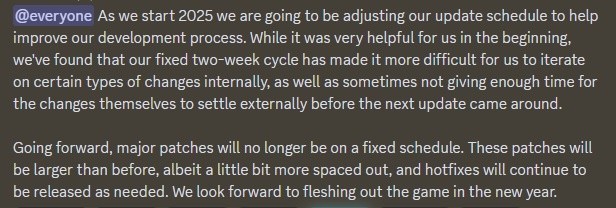 Image: discord.gg
The biweekly update cycle, while initially beneficial, did not allow enough time for changes to fully integrate and function as intended. This realization has prompted Valve to rethink its strategy, focusing on the quality of updates over their frequency.
Despite the drop in player numbers, there's no need for alarm. Deadlock remains in its early development stages, with no official release date announced. This suggests that fans might not see the game launch in the near future, particularly as Valve's attention seems to be shifting towards a new installment in the Half-Life series, which reportedly has received internal approval.
Valve's approach underscores a commitment to creating a high-quality product rather than rushing to meet deadlines. The company believes that satisfied players will naturally contribute to its success. This strategy is not new for Valve; Dota 2 also experienced similar changes in its update schedule during its early days. Therefore, the adjustments to Deadlock's development process should be seen as a positive step towards delivering a polished and enjoyable game.